
 Home
Home About Us
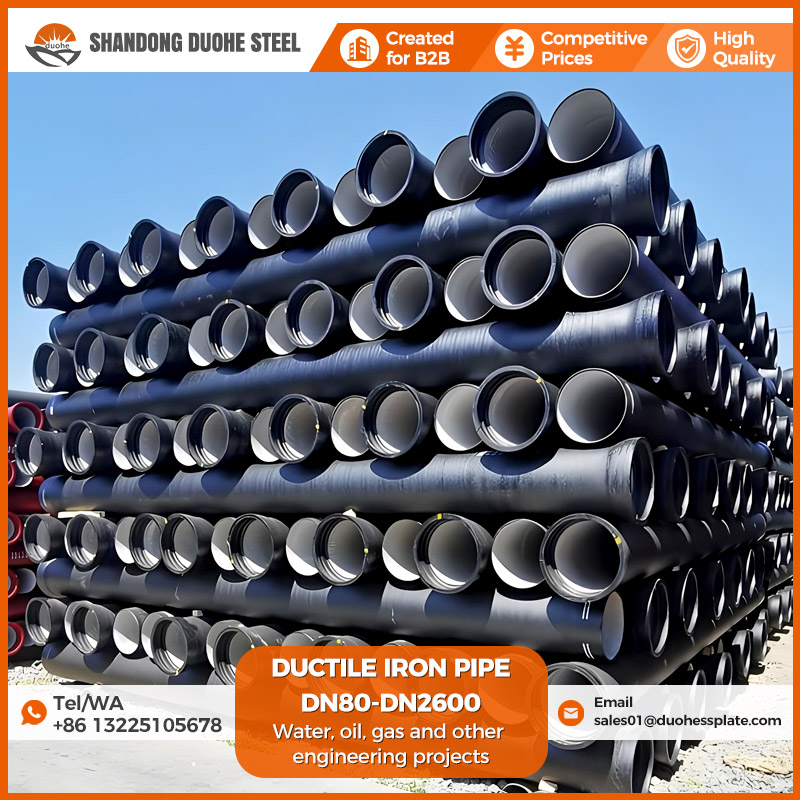
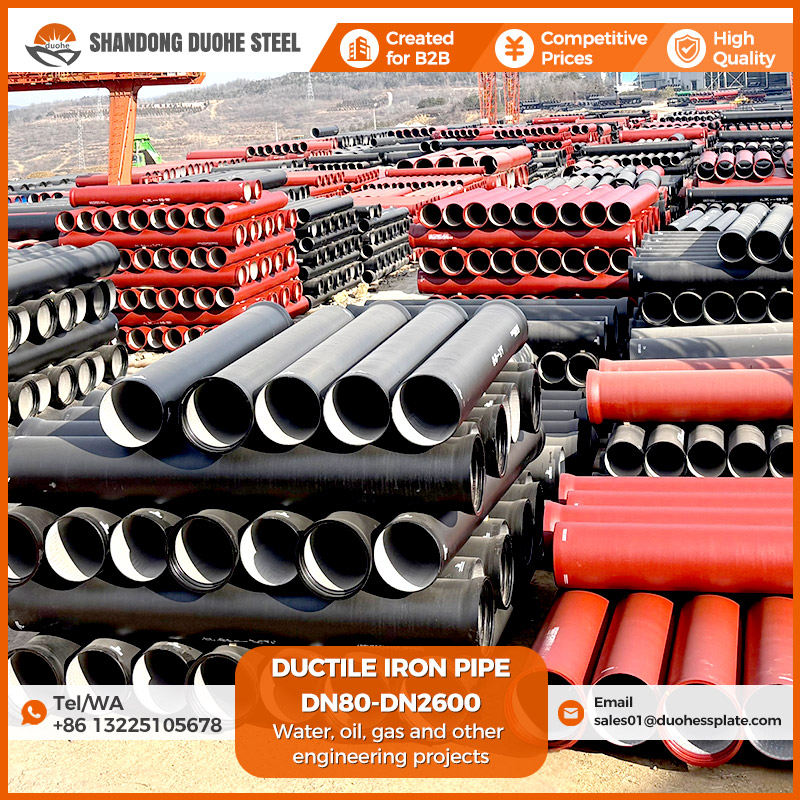
Ductile Iron Pipe (DIP)
Product Overview: Why Ductile Iron Pipe Stands Out in Global Trade
Ductile Iron Pipe, also known as spheroidal graphite iron pipe, is manufactured by adding magnesium, calcium and other rare earth metals to gray cast iron, making the graphite in the metal structure form spherical nodules—this fundamental change gives it superior performance compared to traditional cast iron pipes and even other pipeline materials. It retains the corrosion resistance of cast iron while doubling the tensile strength (minimum 420 MPa, compared to 180 MPa for ordinary cast iron) and excellent impact resistance, making it suitable for various harsh working environments such as underground burial, high-pressure water supply, and sewage discharge.
In international trade, DIP is widely used in municipal water supply and drainage, industrial fluid transportation, oil and gas transmission, and rural infrastructure projects. Its global market demand is stable, with major importing regions including Europe, North America, Southeast Asia, the Middle East, and Africa, while India, China, and Turkey are the world’s leading exporters. For international buyers, choosing DIP means selecting a product with mature technology, stable supply, and broad application scenarios, which can effectively reduce project risks and long-term operation costs.
Key Specifications (Buyer’s Checklist)
When sourcing Ductile Iron products (such as pipes, fittings, manhole covers, or automotive parts), these are the critical parameters you must verify to ensure compliance with international standards.
| Parameter | Specification Range | Industry Standard | Buyer’s Note |
| Material Grade | Grade 400-18, 450-10, 500-7, 600-3, 700-2 | ISO 1083, ASTM A536 | Higher numbers indicate higher tensile strength; lower numbers indicate higher elongation (flexibility). |
| Tensile Strength | Min 400 MPa – 700 MPa | ISO 1083 | Critical for pressure-bearing applications like water pipelines. |
| Yield Strength | Min 250 MPa – 420 MPa | ASTM A536 | Ensures the material does not deform permanently under load. |
| Elongation | 2% – 18% | ISO 1083 | Higher elongation means better ductility (ability to bend without breaking). Crucial for seismic zones. |
| Hardness | 150 – 250 HB | ASTM E10 | Affects machinability and wear resistance. |
| Corrosion Protection | Asphalt coating, Epoxy (Internal/External), Zinc coating, Galvanized | ISO 8179, AWWA C110 | Essential for underground pipes to ensure a 50–100 year lifespan. |
| Dimensions | DN 80 – DN 2600 (Pipes) / Custom per mold (Fittings) | ISO 2531 / EN 545 | Verify tolerances strictly if parts are meant to fit with existing systems. |
Primary Applications & Use Cases
Understanding the end-use helps in selecting the right coating and grade. Ductile Iron is predominantly used in:
Water & Sewage Infrastructure: Pressure pipes, fittings, and valves. The material’s corrosion resistance and high-pressure tolerance make it the global standard for municipal water supply (ISO 2531 / EN 545).
Urban Infrastructure: Manhole covers, tree grates, and drainage grates (EN 124). Buyers focus on load class (A15 to F900) to ensure safety in high-traffic areas like airports and highways.
Automotive & Industrial: Crankshafts, hubs, and suspension components. Here, the focus is on fatigue resistance and machinability.
Unique Features (The Buyer’s Advantage)
Why should you choose Ductile Iron over fabricated steel or plastic?
High Strength-to-Weight Ratio: It allows for thinner wall sections compared to gray iron, reducing shipping weight (freight cost) while maintaining structural integrity.
Superior Corrosion Resistance: When coated according to standards (e.g., zinc + epoxy), Ductile Iron outperforms mild steel in underground environments, offering a lifespan of 100+ years with minimal maintenance.
Machinability: Despite its strength, Ductile Iron offers excellent machinability, reducing secondary processing costs for manufacturers.
Impact Resistance: Unlike rigid PVC or brittle gray iron, Ductile Iron can absorb shock and vibration, making it ideal for high-pressure water hammer scenarios.
FAQ (For Ductile Iron Pipes Buyers)
Q1: What is the difference between Gray Iron and Ductile Iron?
A: Gray iron has graphite in flakes, which act as stress raisers, making the material brittle. Ductile iron contains spherical (nodular) graphite. This microstructure gives it high tensile strength and impact resistance (similar to steel) while retaining the corrosion resistance and castability of iron. If your application involves pressure or impact, you need Ductile Iron.
Q2: How do I ensure the quality of the coating to prevent rust during shipping?
A: Rust is a common issue during maritime shipping (exposure to salt air). As a buyer, you should specify in your contract that the coating must comply with ISO 8179 (for pipes) or a specific zinc-rich primer + topcoat for fittings. Additionally, request that products be packaged with anti-rust VCI paper or shrink-wrapped on pallets to prevent "white rust" or oxidation during transit.
Q3: Can Ductile Iron be welded or machined easily?
A: Yes, but with precautions. Ductile Iron has excellent machinability, allowing for drilling and tapping. However, welding requires specific electrodes (Nickel-based) and pre-heating to avoid altering the microstructure (martensite formation). If your project requires extensive welding, we recommend sourcing Ductile Iron fittings specifically cast to your required geometry to minimize on-site welding.
Contact our sales team today for a quotation or to discuss your project requirements. We are committed to providing high-quality DIP pipes that meet your exact specifications and delivery deadlines.
Your trusted partner in ductile Iron solutions.For further technical information, pricing, or customization, please contact our sales team:
Tel/WA/Wechat: +86 13225105678
Email: sales01@duohessplate.com
Previous:no more
Next:Carbon Steel Pipe
Leave a Message
Your voice matters! Whether you have a brilliant idea, valuable feedback, a pressing question about our products or services, or simply want to say hello – we genuinely want to hear from you.